Thursday, December 16, 2010

My 100 Favorite Books (Part One)


So I haven’t written a blog entry for a really long time. In order to make up for this, I am planning on posting several new entries over the next few days. These new posts will all be connected to the same theme: my 100 favorite books.

I know that lists ubiquitously abound these days. We have lists for the 100 places we must see before we die, lists for the 100 best novels, for the 100 best films, shopping lists, bucket lists, lists for everything. Consequently, you may be wondering, “Why does the good professor feel it is absolutely essential to clog the ether with one more unnecessary and superfluous listing that doesn’t matter and won’t change anything?” I have several responses to this question.

First, you are correct in assuming that this list, like so many others I just named, is very unnecessary, but I would argue that being unnecessary is not the same as being unimportant. Many of our greatest works of art are – by definition – technically unnecessary, but would anyone argue that Michelangelo’s David or da Vinci’s Mona Lisa are unimportant? I think not. As Oscar Wilde once said, “All art is quite useless.” In other words, we don’t make art because it’s necessary. We make it because we can! We make it because it makes life more interesting, more meaningful, more purposeful, and more beautiful. We make lists for the same reasons.

Second, you are correct in assuming that this list, given all the other lists that are floating around out there, is highly superfluous. Still, by its nature a list is a very scientific endeavor. As with all scientific endeavors, I hope this one will reveal some underlying truth to those who choose to study it. What may it reveal? Perhaps it will reveal nothing more than my personal tastes, preferences, and tendencies. Perhaps it may reveal my personality, my mindset, and worldview. Perhaps it may only reveal that I have read a lot of books. Whatever may follow, this list is sure to reveal something about me. Maybe you’ll learn more about me or more about yourself and your own tastes, or maybe you’ll simply be introduced to books you never dreamed of reading for yourself. What you choose to gather from this list is up to you.

Last, you are NOT correct in assuming that this list does not matter and will not change anything. It does matter, very much in fact, to me. I have been changed by this list already. You might almost say that this list is my life in books. I cannot say for certain that this list will matter to you in the same way that it matters to me. I cannot even say for sure that you will be changed by this list. I do know, however, that this list – like any other – will be a catalyst for discussion. Feel free to disagree. Feel free to be intrigued, annoyed, frustrated, or even agonized that I didn’t include Book X or mention Book Y and instead choose Book Z. I won’t mind in the slightest. After all, the more you discuss this list with me or amongst yourselves, the more time and attention you devote to my list, the more you validate it. You make it matter by giving it some thought.

Without further ado, in no defined order, I give you my 100 favorite books . . .

1. The King James Bible (1611): The most poetic of biblical translations! Some other translations may appeal more to modern readers, but you’d be hard pressed to find more enchanting Renaissance English verse than what is found here. Only Shakespeare comes close. The Book of Psalms is especially gorgeous, although my favorite parts of the KJV are the lightning-forked prophecies of Isaiah and Jeremiah.

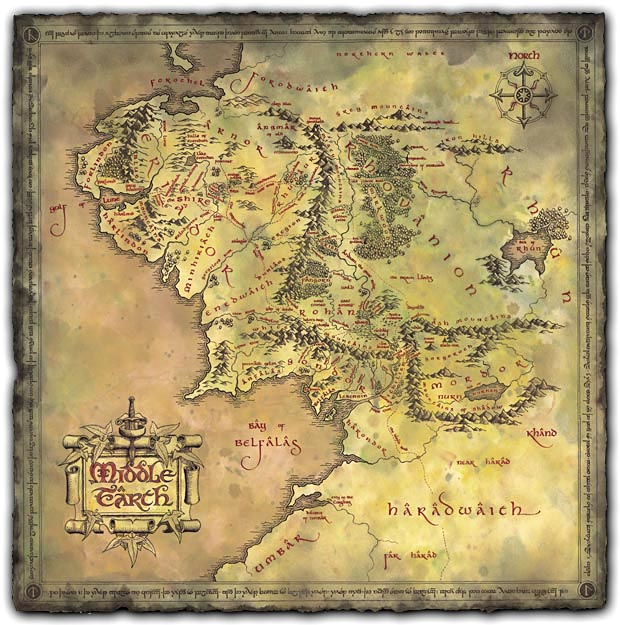
2. The Lord of the Rings (1954-1955): Part myth, part history, part epic, complete brilliance! Tolkien’s fantasy novel is the benchmark for all fantasy fiction. In a little over 1000 pages, not counting the appendices, Tolkien left a mighty legacy – and quite a reputation to uphold – for fantasy writers and filmmakers around the world.

3. The Complete Short Stories of Flannery O’Connor (1971): America’s most gifted short story writer was especially adept at presenting the American South as a chaotic, poetic hotbed of human beauty and frailty. No other American writer is so painfully honest in such a wickedly funny way!

4. To the Lighthouse (1927):Virginia Woolf’s most ethereal, otherworldly novel, and believe me, THAT is saying something! The book starts by being about a child’s desire to sail to a lighthouse and ends with an entire family – and even friends of the family – coming to realize the importance of a single human presence in their lives. This book achieves a double feat! First there’s one of my favorite chapters in any novel I’ve read(Part 6 of the Lighthouse section), and then there’s also my favorite concluding paragraph to any novel I’ve read. Study the last sentence alone and marvel at Woolf’s genius!

5. Songs of Innocence and of Experience (1789): Deceptively simple verse that unleashes a torrent of buried passion, frustration, anxiety, and desire. From “The Lamb” and “The Chimney Sweeper” to “The Garden of Love” and “London”, Blake packs an intellectual, philosophical, political, and theological wallop into fewer lines than you would think possible. His writing is fresh, economical, and super charged with energy even over two hundred years after its conception.

6. Alice’s Adventures in Wonderland and Through the Looking-Glass (1865-1871): I know it’s cheating, but here’s a two-for-one deal! These books are enjoyable mind-benders to say the least. Both were decidedly products of their time and yet also way ahead of their time. Like the recent films Inception, Eternal Sunshine of the Spotless Mind, and Groundhog Day, Lewis Carroll’s writing takes your mind for a ride and never feels like tedious work, only fruitful exercise for the brain.

7. Portrait of a Lady (1881): The pinnacle of Henry James’ earliest attempts at European realism, this novel brought polish and sophistication to American novel writing that had been previously underemployed. Although the main idea of the book – optimistic, naïve Americans interacting with jaded, worldly Europeans – would be revisited by James again and again, this novel’s treatment of the subject remains unparalleled in its discussion of how humanity forms consciousness though negative experience. The heroine of the novel loses her youthful naïveté and gains a more enlightened perspective in one of the most memorable sequences of quietly tragic events.

8. Candide (1759): One of the Enlightenment’s more wickedly funny social satires, Voltaire’s treatise on humanity’s worst flaws (bigotry, intolerance, cruelty, indifference, racism, etc.) is also much more enjoyable reading than its subject would suggest. Throughout the story, the main character – Candide – and his friends suffer more than is perhaps humanly possible, and all the while Voltaire addresses the terribly selfish nature of the world around him without seeming preachy or self-righteous. The book’s conclusion, where Candide does not accept that he lives in “the best of all possible worlds” but instead decides to “cultivate our garden”, is a fitting metaphor that reminds us never to accept the status quo and to continue striving for a better, more perfect world.

9. The Great Gatsby (1925): Despite what some may believe, the American Dream has always been full of dangerous possibilities and potential for disaster. Perhaps no one understood this better than F. Scott Fitzgerald who wrote elsewhere, “There are no second acts in American lives.” When we dream big, we either succeed beautifully . . . or fail miserably. This sleek and slim little book, a finely cut diamond of a novel, unflinchingly reveals what lies behind the miserable failures of so many big American dreams.

10. The Divine Comedy (1308-1321): What cojones! Dante Alighieri brazenly offers us nothing less than a guided tour of heaven, hell, and purgatory complete with an already deceased classical poet (Virgil) acting as our tour guide. If this weren’t risky enough considering the time when this text was written, Dante literally puts his life on the line even more by placing his personal and political enemies (he mentions them specifically by name) in one of the nine circles of hell. Despite what must have been the shocking nature of this book, Dante’s “comedy” is brimming with less controversial and more insightful speculation about destiny, love, good and evil, and human nature. His thoughts on these subjects continue to influence writers today.

To be continued . . .

Tuesday, July 13, 2010

The United States of Protestantism: A Love Story Part Two


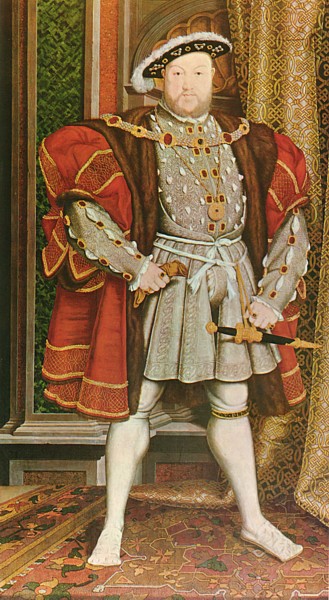
Catherine's claim was monumentally important in the history of Christianity primarily because Pope Clement VII, who was also one of her cousins, took her view on the matter. King Henry was subsequently denied his petition for divorce. Meanwhile, several Protestant sympathizers who had ingratiated themselves to the king enough to become some of his most trusted advisors were beginning to convince Henry that he as soveriegn of the United Kingdom did not need the Pope's approval for divorce. Their argument hearkened back to the medieval concept of the divine right of kings, which essentially states that the king is all powerful not because humanity condones his power but because God has bestowed that power upon him. If this were indeed true, and Henry was certainly inclined to believe it, then Henry's position as king would entail that God had personally chosen him to rule over the people unlike the Pope, who was merely a church official elected by cardinals. According to Henry's Protestant advisors, this essentially meant that he should be the head of the church and not the Pope, at least in his own country.

Now I think you are beginning to see what a major issue this would become, not just for Henry and Catherine's marriage, but for the entire religious history of England, and by extension, the United States of America. Henry decided to ignore the Pope's command to remain married to Catherine; he disassociated himself, and the entire United Kingdom, from the Pope and the Roman Catholic church; he declared himself the head of a new, Protestant church called the Church of England, and as his first official act as head of that church, he granted himself a divorce from Catherine of Aragon. Soon afterward, Henry and Anne Boleyn were married in a private service. Interestingly enough, the subsequent monarchs of the United Kingdom carry on the tradition of acting as head of the Church of England, also called the Anglican Church and the Episcopal Church in North America. The current head of that church is Elizabeth II, Queen of England, Scotland, Wales, Northern Ireland, Canada, Australia, etc.

Thus bloomed legalized Protestantism for the first time in the British isles. At the same time, the persecution of staunch Catholics who refused to convert began with full force. Churches and monasteries, wealthy stores of Roman Catholicism, were robbed, burned, desecrated, and those who would not publicly condone Henry's new marriage were summarily executed. Among these martyrs was Thomas More, the author of Utopia and King Henry's former teacher and friend. Unfortunately, the religious and domestic upheaval Henry caused because of his divorce hardly ends there. In time, Anne too was unable to produce a male heir although she did give birth to the Princess Elizabeth, who would later become Elizabeth I, Queen of England. Henry also tired of his new wife after a time, and she was accused of adultery, a crime that was considered treasonous in a queen who was meant to act as the holy fount from which God's chosen vessel of lordship should spring forth. Most historians agree that many of the charges of adultery leveled against Anne probably held no merit and served simply as an excuse to get rid of her. At any rate, she was soon beheaded whether she was guilty or not.

Henry, still a Protestant, married a young lady from a powerful Protestant family named Jane Seymour. It is generally believed that Jane Seymour was perhaps Henry's favorite wife, if for no other reason than because she was finally able to do what none of the other wives had accomplished before her. She gave birth to a son, Edward VI, in 1537, but sadly she died not long after from complications with childbirth. Henry ruled for several more years afterward, and of course there were more wives, but let's fast forward to what happened after Henry's death in 1547. Edward -- as the only living, legitimate, male heir -- became king after his father's death, even though he was only about ten years old at the time. His grandfather and uncle on the Seymour side acted as regents for him. Still, Edward was sickly, and after about six years he too died from a fever. After a brief period in which the crown was seriously disputed ( see more information on "Lady Jane Grey"), Henry's oldest living child from his first marriage, his daughter Mary, became the ruler of England. Mary was, naturally, raised as a Catholic by her mother, so for a while England went back to being an aggressively Catholic nation. Many people who had converted to Protestantism immediately changed sides again, and those who refused to change were burned at the stake. Mary's bloodthirstiness in dealing with Protestants earned her the nickname "Bloody Mary".

Fortunately for the Protestants, Mary was only queen for about five years, and then she too died, probably from some kind of stomach or ovarian cancer. Next in the line of succession was Elizabeth, a young, vibrant, healthy, intelligent Protestant, and she ruled for 44 years. She also restored some religious and domestic order to the kingdom, and set the Elizabethan Age in motion, a golden period in which English art, music, literature, and world power flourished. So, in short, the United Kingdom had flip-flopped back and forth between Catholicism and Protestantism, with Catholics burning Protestants and Protestants executing Catholics, for many years. Finally, though Elizabeth, the Protestant Reformation set in with full force. Elizabeth's heir, James I, was also Protestant, and so were all of his descendants in the House of Stuart. James was also the sponsor for a now-famous 1611 translation of the Bible that many literary scholars know and love, the King James Version. Of course, James was also the king who approved the Puritan pilgrimage to North America, setting a precedent for Protestant domination in the United States.

And all of this because Henry wanted a divorce . . . :)

Wednesday, June 16, 2010

The United States of Protestantism: A Love Story


Once upon a time (for this is how all love stories should begin), there was a ruthless, lecherous king of England married to a beautiful but somewhat somber Spanish beauty named Catherine of Aragon. This certain king desired nothing more than to produce an heir to his throne with the help of his wife, but this simple duty turned out to be more trouble than he had realized. Catherine had unfortunately experienced a number of stillbirths and miscarriages; her only living child was a girl she had, being Catholic, named Mary. Her husband, the king, was most displeased with the results of his efforts to have a child with his Spanish wife, and so he resolved to cast her aside and marry a vixenish young girl ho had caught his majestic eye, one Anne Boleyn. Perhaps, thought the king, she would be able to produce an heir.

I'm sure if you know anything at all about history, then you've guessed by now that the king in question is, of course, Henry VIII. My description of his abandonment of his first wife, however, is grossly oversimplified and perhaps a little unfair to Henry, so let me be more generous with information. I know we are all familiar with how Henry had six wives, how he divorced some and beheaded others, how his surviving children fought and bickered and argued for the throne, and how various religious forces (both Catholic and Protestant) used these monarchs to advance their own sometimes crooked agendas. Still, let me enlighten you on a few details you might not know. I may be able to present a more sympathetic view of poor Henry than you ever thought possible.

First, Henry had quite a precedent to live up to, that precedent being his older brother Arthur. Yes, Henry was born the second son to his mother and father which means, if all had gone as planned, Arthur would have been king and not Henry. As Arthur reached maturity, his parents betrothed him to the a young Spanish noblewoman in hopes of creating a strong alliance with Spain, at that time the most powerful nation in Europe. This young noblewoman was, you guessed it, Catherine of Aragon. Interestingly enough, Catherine was the daughter of the famous couple Ferdinand and Isabella. You know, the folks who financed Colombus' journey to the New World? Well, young Catherine was brought to England, she lived in residence with the royal family, and married the would-be-future king. Arthur, unfortunately, died soon after from either consumption, complications of diabetes, or the sweating sickness. Arthur's parents, not wanting to lose the relationship with Spain they had fought for so long to achieve, quickly conspired to wed the Spanish princess to their next son Henry.

After Henry was proclaimed Prince of Wales and Catherine became his wife, the two settled down to the business of preparing to become England's monarchs. Part of their responsibilities as monarchs entailed that they produce a male heir to the throne, an obligation they, and the rest of the country, took very seriously. Yet, after a time, Henry and Catherine both realized that a male heir would perhaps be impossible. Both times Catherine had given birth to a male child, the child had died very soon thereafter. Henry began to suspect that his marriage was somehow cursed. Then one day, while studying the Bible, Henry came across a passage in the book of Leviticus, chapter 20 and verse 21 where it states: "And if a man shall take his brother's wife, it is an unclean thing: he hath uncovered his brother's nakedness; they shall be childless" (KJV). Henry, being heavily schooled in theology as part of his princely education, interpreted this passage to mean that his marriage was indeed cursed because he had married his brother's wife. He believed that as long as they were married, he would be without an heir.

Now, two things can be said of Henry's superstition. One, it makes his decision to divorce Catherine seem a little more understandable. If he were indeed tormented by the thought of committing incest ( which he thought he was doing), then it stands to reason that he would want to make a clean break of things both for his own sake and for Catherine's. Still, his argument didn't really hold up in some pretty obvious ways. After all, he and Catherine were NOT childless. Their daughter Mary was proof of that. Also, another passage in the Old Testament, this time from Deuteronomy 25:5-10, encourages a man to marry his brother's childless widow and father children with her so that she does not remain childless. In the Old Testament days, this was a way of ensuring that young widows weren't left out in the cold without familial support and protection. Fittingly, Catherine envoked this passage of scripture in her defense of her marriage to Henry. She also claimed that her marriage to Henry's brother Arthur had remained unconsummated, meaning they had never made it official by having sex. There was no method to prove the matter, however, but historians have speculated in various ways since Catherine's claim.

Also, whether or not Arthur and Catherine consummated their marriage, it is a certainty that Henry had already abandoned his wife's bed for the love of another woman, the aforementioned Anne Boleyn. I won't say much about Miss Boleyn since she isn't really the focus of the piece, but briefly I'll give you an idea of how Henry became infatuated with her. She was known to be quite beautiful, somewhat flirtatious, witty, charming, and gracious. Henry had already courted her sister and probably slept with her too (yikes!) before changing course and instead courting Anne. By the time he began to seek a divorce, he felt sure he was in love with her. Divorcing Catherine would allow him to court Anne officially as well as secure him the opportunity of marrying her and beginning the process of producing a male heir all over again. Naturally, many scholars and historians speculate that Henry's attraction to Anne Boleyn may have been the real reason Henry wanted a divorce. This theory believes that the Leviticus passage was just a ruse to make the whole affair seem more legitimate in the eyes of the Pope, who was the only person in all of Christendom would could grant a church-sanctioned divorce at this time. Remember, almost everyone who was Christian was also Roman Catholic, but there will be more on this later.

Now Catherine's claim about her marriage to Arthur remaining unconsummated is perhaps one of the pivotal moments of Christian history. Why, you may ask, was a private marital matter between a husband and a wife so important in the development of Christianity later on? Well, the answer to this is too long and complicated to explain here. See the second part of this blog for more information!

Wednesday, May 19, 2010

LOTR: An Elegy for the Past


(While you may enjoy the following blog without a detailed knowledge of J.R.R. Tolkien, Middle-Earth, or the Lord of the Rings trilogy, I wouldn't suggest reading this unless you have either 1) read the books or 2) seen the Peter Jackson movies based on them. Much of what I write about here won't make sense unless you are somewhat familiar with the story. Also, just so you know, there are some plot spoilers.)

"The world is changing: I feel it in the water, I feel it in the earth, and I smell it in the air."

The words above appear, spoken by Treebeard, in the latter sections of Tolkien's novel The Return of the King. They could have just as easily appeared at the beginning of the first book in the Lord of the Rings trilogy, The Fellowship of the Ring, because the idea expressed in them is really one of the central themes of the entire work. Peter Jackson, the director of the recent LOTR films, apparently realized this; consequently, he includes the expression at the beginning of the first film as a kind of voice-over preface to the film trilogy. Granted, Galadriel (Cate Blanchett) speaks the words in the film as a way of segueing into the backstory about the One Ring's creation, but it works just as well when she says it as it does when Treebeard says it in the book. The point is that someone from the ancient world, as both Galdriel the Elf and Treebeard the Ent are, makes it clear to the younger folk (men, dwarves, hobbits) that times, well, they are achangin' . . . and not necessarily for the better.

True, by the end of the series, the powers of good have triumphed over the powers of evil. The Dark Lord Sauron has been defeated, the traitor Saruman is dead, a new benevolent King (Aragorn) has returned to rule over the land, and Frodo and the other Hobbits can return safely to the Shire. But at what price has victory been won? What evils have been wrought by the defeat of EVIL? This is plainly a major concern for Tolkien who could have chosen to end his story right after the Ring is destroyed and Aragorn is crowned King. Instead, the story lingers on the breaking of the fellowship, the scouring of more evil from the Shire itself, and Frodo's departure from Middle-Earth with the great Elven lords. Tolkien's point may be that victory in arms is never so simple that all opposition can be cleared away within a matter of a few days. The later plot points, wherein the evil comes home to the Hobbits in a way it never has before, resonate more fully precisely because Tolkien doesn't shy away from them. In other words, leaving out the scouring of the Shire or Frodo's sailing to Valinor might have made for more entertaining reading, but the story as a whole would have lacked honesty. The honest truth is that the restoration of order is a messy affair and takes time.

Aside from this, there is also the destruction of much that was good in Middle-Earth along with much that was evil. With Sauron's defeat comes the loss of many beautiful things, like the reign of the Elves or the Rings of Power themselves. Tolkien suggests that the passing away of another age (the Third Age, to be exact) brings with it a new time full of hope and optimism, but it also brings with it the death of many older values that were once held dear. For these reasons, we are told, the time of the Elves is over and the Age of Men has begun. Over time, especially after the Third Age, one can also see that not only will Elves lose prominence in Middle-Earth but also Ents, Dwarves, Wizards, and even Hobbits. Sure, the Orcs and Goblins won't be much of a bother in the future, but what the Elves? Where do they fit into the picture? Not in Middle-Earth apparently. In short, the world has been cleansed of a great evil, but it also loses great good in the process.

How does this happen? Does it make sense? Well, unfortunately it makes perfect sense. The One Ring's fate is bound up with the fates of the other ruling rings crafted by Sauron. If you can recall, there were three made for the Elves, seven for the Dwarves, and nine for the race of Men. Their survival depends upon maintaining the power of the One Ring; it can survive if they are each destroyed, but they cannot survive if the One Ring loses power. This, in effect, means that the Elves lose most of their power in Middle-Earth when their rings, which depend upon the One Ring's power, cease to function after the Ring falls into the fires of Mount Doom. Yet already, at the beginning of the books, we see the Elves leaving Middle-Earth in large numbers, abandoning it to pursue the Undying lands of Valinor. Even before the destruction of the One Ring, it seems that the Elves are becoming increasingly aware that their time in Middle-Earth is running out. A new age, for better or for worse, is dawning. The Ring's destruction just seals the deal. The Elves must leave Middle-Earth under the control of Men.

Of course, by the time Tolkien's story takes place, Middle-Earth has already seen plenty of change. Numerous stories, poems, and songs are sung or told throughout the narrative that express the nature of the past ages of Middle-Earth, with its various heroes, warriors, villains, and ladies fair. Each narrative makes clear by the teller of these tales (whether it be Gandalf, Bilbo, Aragorn, Treebeard or otherwise) that although good usually triumphs over evil, there is a high price to pay for such victory. The Old Ages, complete with their good and their evil, have passed from this world and have left room for new stories, new problems, new dilemmas, and maybe even new hope to enter the scene. So change is hardly an unknown idea in Tolkien's world. After all, Numenor decays and is replaced by the realms of Gondor and Arnor which, eventually, also decay. All things pass away, and nothing remains. What's remarkable about the changes in Middle-Earth that we witness in the Lord of the Rings trilogy is that they are steadfast and binding. These changes cannot be undone.

After every age, in real life or in fiction, new times succeed the former. Sometimes we mistakenly believe that the past was only full of innocent, good times, but any accurate history book would tell us that this was simply not the case. The past was full of its fair share of atrocities and evil. Still, it seems to be true that as time goes by everything either alters or ceases to be. That's true of the good as well as the bad. So, while it may be true to say that much of what was great about the past is now gone, it's also accurate to say that much of what made the world a scary place has now ceased. Does this mean our own age is a better time? Or maybe we are worse off than our ancestors? Change suggests neither possibility. What change does express is that we have our own unique set of problems, dilemmas, and moral questions in this age and in any other. There is much that is good and beautiful about our world, and there is also much that is frightening and even evil. What's sad is that all the good cannot survive without all the bad. This is the nature of our world and Middle-Earth too: times change both for better and for worse.

Thursday, May 13, 2010

Robin of the Hood


The Robin Hood stories, despite what a recent film would have you believe, are largely legendary. Like the stories of King Arthur and His Knights of the Round Table, these stories never happened, at least not in the way they have been imagined through the years. Granted, there may have been a real outlaw who served as the model for all the Robin Hood legends. His name was Robert Hod, but he certainly didn't live in Sherwood Forest or maintain a band of merry men.

The legend of Robin Hood has been passed down to us throughout the years in a form of poetry called the ballad. Ballads are kind of an early form of country-western music, a narrative that plays out with the aid of musical accompaniment, usually a guitar. Balladeers and bards, the practitioners of the ballad, would at first sing of Robin as a trickster-like figure who stole from the rich for his own delight and amusement. It wasn't until much later (1589) that Robin Hood became famous because he "tooke from rich to give the poore". Also, the merry men did not enter into the stories in their earliest forms, nor did the Maid Marion. And since ballads were transmitted orally, meaning that they were meant to be sung and not written down, nobody really could compare the various versions of the legend in a scholarly sense. As a result, each bard had his own way of telling the tale, complete with a particular villain, conflict, and theme that could alter (and often did) to suit the bard or his audience.

By the year 1400, a certain priest remarked that his parishioners would rather listen to a bard sing of "a tale or a song of Robyn Hood" than listen to one of his sermons. Thus was the growing appeal of the legend, and as the appeal grew, so did its cast of characters. Over time, Little John, Friar Tuck, Will Scarlet, Much the Miller's son, the Sheriff of Nottingham, Sir Guy of Gisbourne, and the Maid Marion were added to suit various purposes. By the sixteenth century, when Robin suddenly became a vigilante freedom-fighter rather than a trickster, the public decided he needed a love interest. The Maid Marion, in effect, was fashioned for him to woo and marry. It helped that she was a Norman aristocrat; her love for the Anglo-Saxon yeoman Robin gave his cause some legitimacy. Marrying the cousin of King Richard would practically make Robin Hood the legitimate ruler of his own people.

Speaking of Richard the Lionhearted, after he returned from the Crusades, the king discovered that his brother John had attempted to supplant him as king. Interestingly enough, Nottingham Castle and the powers-that-be who lived there were the most fervent supporters of John's attempt. So practically as soon as Richard returned home, he made his way to Nottingham Castle, set up some gallows, and executed those who were found guilty of treason. By the way, Prince John would eventually become king anyway, but it would be a few more years and, fittingly, after Richard's death. The most amusing part of this story, which is true by the way, is not the duplicity of John or the swift justice of the king or the fact that the action takes place mostly in Nottingham, the focal point of many Robin Hood legends. No, the interesting thing to me is that as soon as the garrison at Nottingham was surrendered back into Richard's hands, he promptly went off again to celebrate by hunting in Sherwood Forest. No record exists to show he met Robin Hood there. :)

Visiting Sherwood Forest must surely be an attraction for any tourists interested in Robin Hood sites. After all, Robin Hood is just as well known for the location of his hiding place as he is for his trickery and thievery. Indeed, his name "Hood" is medieval slang for the forest itself. Still, it should be pointed out that Robin's Sherwood is a legendary setting modeled after the real Sherwood but not exactly like it. Knowing this might save you some anxiety if you were, for instance, determined to match every single location in the forest with a plot point in the legends. Don't be disappointed; it just doesn't work like that.

Now, let's say a few things about how the legends of Robin Hood have been handled over the years. The medieval ballads were first written down in the nineteenth century, and as you can imagine, there were no two that were exact matches. Fortunately, you can easily access these ballads and read them for yourselves on the internet. The best place to look at them is at this site: www.boldoutlaw.com. The site even provides a medieval ballad tune to assist you in imagining what these songs would have sounded like when performed by a bard. Of course, ever since the ballads were first recorded in written form, numerous writers and storytellers have taken up the Robin Hood brand and made it their own, much like the King Arthur stories have been told and retold throughout the years. This pattern continued well into the twentieth century when Hollywood finally got its claws on the legend and has either done it justice or ripped it to shreds ever since (take your pick).

Other than the original ballads, probably my favorite written form of the legend was actually crafted by an American. Howard Pyle was a late nineteenth-century writer and illustrator who managed to capture the trickster qualities of Robin while also emphasizing his status as a beloved vigilante. Meanwhile, Pyle also produced drawings of the legends that look remarkably like original medieval woodcuttings. My parents gave me a copy of Pyle's book, The Merry Adventures of Robin Hood, one year for Christmas. I have treasured it ever since. (Also of interest, Pyle's students included N.C. Wyeth and Jessie Wilcox Smith, world-famous illustrators themselves.) Check out this book because it is beautiful and so much fun to read. Reading Pyle is almost like being back in Sherwood with Robin Hood and Little John, honestly!

My favorite film version of the legend would have to be the Micheal Curtiz-directed, 1936 vehicle starring Errol Flynn and Olivia de Havilland: The Adventures of Robin Hood. If you have read my blog about 1066, then you know all about the Norman conquest. Well, the interesting thing about Curtiz's film is that the story plays out with the various conflicts between the Anglo-Saxons and the Normans surging in the background. It also includes Prince John as a delightfully effeminate villain played to perfection by Claude Rains, one of my favorite supporting actors of early Hollywood (see: Casablanca, Notorious, etc.). Add to that Basil Rathbone (aka Sherlock Holmes) as Sir Guy, and you have a seriously good swashbuckling time on your hands. This film is so saturated in wit, humor, pure joy, romance, and technicolor that it's virtually impossible not to be entertained by it. I show it to my students every year, and I'm always amazed that in this age when technology has advanced beyond our wildest dreams, an old classic movie about a man of the forest can still make my jaded students smile. Also, if you are interested in appealing to a younger audience, Disney's animated version of the legend is a surprisingly faithful adaptation, and the portrayal of Prince John in the film may have even been inspired by Rains' performance. My favorite thing about the Disney film is that it begins with narration that comes from, you guessed it, a rooster who also serves as a balladeer. In fact, the whole film is practically sung to the audience in ballad form. What a wise decision on the studio's part to remain faithful to the source of the legends and appeal to young audiences at the same time!

There are some serious historical inaccuracies in some other film versions of this legend. I liked the Kevin Costner version well enough when I was much younger, but now that I'm older it just annoys me that Costner is the only person in the film without an English accent. Couldn't they find an English actor to play the part? This unfortunate fact did lead to some good comedy though as Cary Elwes would later say in the Mel Brooks' film Robin Hood: Men in Tights, "Unlike some other Robin Hoods, I can speak . . . with a British accent!" Obviously, I am not the only one annoyed by Costner's lack of Englishness.

I don't really know if I want to see the new film starring Russell Crowe. In many ways, it looks like a very tiring and spiritless retread of material that should be buoyant and joyful. Also, I don't like how they've been advertising that this is the "true story of the epic outlaw". This is a legend, people! Does everything have to be a true story? I think not. I agree with Maxwell Scott, a character in John Ford's film The Man Who Shot Liberty Valance, when he says, "When the legend becomes fact, print the legend." Who wouldn't prefer the lusty legend to the grim-faced reality of Russell Crowe any day?

Wednesday, May 12, 2010

1066: England Gets a New King and a New Language


I am not always a believer in memorizing dates. Does a person really need to know in what exact year William Shakespeare was born? Surely not, but it's best to have a general idea anyway. Still, despite the overwhelming evidence that suggests we who study history don't always need to know EXACTLY when certain events occurred, some years are undeniably important to know and commit to memory. 1776 is such a year in American history. 1939 is a good year to know in the history of Hollywood. And when it comes to the development of the English language, one year should always come to mind. That's right! It's 1066!

So what happened in 1066? Why was it such an important year in the history of our language? Let me tell you the story.

Once there was an Anglo-Saxon king living in present-day England whose name was Edward the Confessor. Edward died without an apparent heir to the throne, and as subsequent legends have claimed (we don't know the facts for certain), he named his brother-in-law Harold, Earl of Wessex, to be king after him. The news of Harold's ascension apparently disturbed a young nobleman living across the Channel in the French region of Normandy, one William the Bastard. Not one to let his unfortunate nickname get the better of him, William (aka "The Bastard") believed himself to be the rightful successor to the English throne although, according to some historians, his claim was rather dubious and more than a little disputable. Well, William challenged the claim nevertheless, gathered a substantial force of his kinsmen to sail with him to England, and prepared to royally thrash Harold and his Anglo-Saxon buddies.

In my opinion, Harold was not a wise man. Instead of waiting safely within the confines of London, he and his men rode down to meet the invading army of Normans at the seaside village of Hastings. If that is not proof enough that Harold didn't really think this through properly, then consider this perplexity. Instead of charging into battle on warhorses, Harold and men strode into battle on foot. Meanwhile, the Normans had successfully bred a warhorse, the destrier, that was compact and powerful enough to carry large men in armor and serve as a formidable cavalry. In short, The Bastard and his horse-warriors trampled the sore-footed Anglo-Saxons, and Harold died either from an arrow in the eye or not (we can't be sure).


So what does all this have to do with language? Well, if you haven't already figured this out, let me explain. William and all his buddies were French. This means they spoke French, right? As the ruling army, they then set themselves up as the aristocracy, proclaiming themselves earls, dukes, and in William's case, king. So as the new aristocracy, England's courtly language became French. Meanwhile, the poor peasant folk still spoke English, a very Germanic language compared to today's English. Essentially, this meant there were at least three languages being spoken in England at this time: English, French, and Latin, which was the language of the church. Over the years, this blending of languages would also mean the inclusion of new vocabulary words into English.

For instance, have you ever wondered why English has so many different words for one subject? Why is it that we refer to a large bovine creature in a field as a "cow" and yet when we serve it for dinner it becomes "beef"? Why does a "chicken" become "poultry"? How does "deer" turn into "venison"? The short (and less complicated) answer to this is that the peasants who raised the animals spoke English and therefore referred to the animals by their English names: cows, chickens, etc. The aristocrats who ate the meals after they were prepared referred to the animals by their French names: bouef (beef), poulet (poultry), etc.

Throughout history, the languages became to merge. English took some of the characteristics of the French language. According to J.R.R. Tolkien, creator of the Lord of the Rings, the Battle of Hastings was probably the greatest tragedy in the development of our language because it essentially meant the end of "uncorrupted" English. In other words, we no longer feel familiar with the language of our Anglo-Saxon ancestors because our subsequent language has been "frenchified" (not to be mistaken for "French-fried" language). As Tolkien explains, the Battle of Hastings brought an end to true English culture and obliterated any form of native mythology England may have possessed at one point. Tolkien makes a good argument. Very few literary scraps exist from the time of the Anglo-Saxons, the most significant of these being the epic poem Beowulf. Still, for anyone who has ever read Beowulf, you know that the poem has been significantly altered over time, giving it a decidedly Christian tone and morality to it that the original epic probably did not contain. Whatever the true nature of Anglo-Saxon mythology would have been, we can only guess.

Interestingly, things may have worked out for the best. Tolkien was apparently so upset about the loss of Anglo-Saxon culture that he set out to recreate it in the Hobbit and the Lord of the Rings. Indeed, the story of the Dragon Smaug is probably directly inspired by Beowulf's battle with a similar dragon. From what I read on "One Wiki to Rule Them All", an online Tolkien encyclopedia, it seems that Tolkien believed that his "fictional" world Middle-Earth (based on the Old English word "middangeard") was actually the present world as it existed about six thousand years ago. If this is true, it would, of course, set the events of his stories well before the time of the Anglo-Saxons, and yet the cultures Tolkien writes about in his books may have served as ancient precursors for the Angles, Saxons, and other Germanic tribes. In effect, Tolkien may have been theorizing about the beginnings of Anglo-Saxon culture and its mythology. (We'll speak more about this later!)

Aside from the obvious influence the Battle of Hastings had on Tolkien personally, 1066 was a significant year for other reasons. William, who became known as "The Conqueror" rather than "The Bastard" for the sake of better public relations, implemented the first really organized Feudal government of England and effectively unified it under one crown and one flag. Before this, England was largely a collective of little, independent kingdoms. After being the first British king to be coroneted at Westmister Abbey (where all later British monarchs have been crowned), William set the course of history that would eventually lead to the foundation of the British Empire, the American nation, the English language, and much of the modern world as we know it. Speaking specifically about language development once again, without the Norman invasion, English today wouldn't sound like the English we know. It would never have developed the way that it did. Our literature would look completely different. Chaucer would have written differently, as would Shakespeare. We might sound more German and less French.

1066 was also the last year England was successfully invaded by an outside force. Even the Nazis couldn't do what William did, which says a lot for him . . . even if he was a bastard.